Making sense of blood pressure results
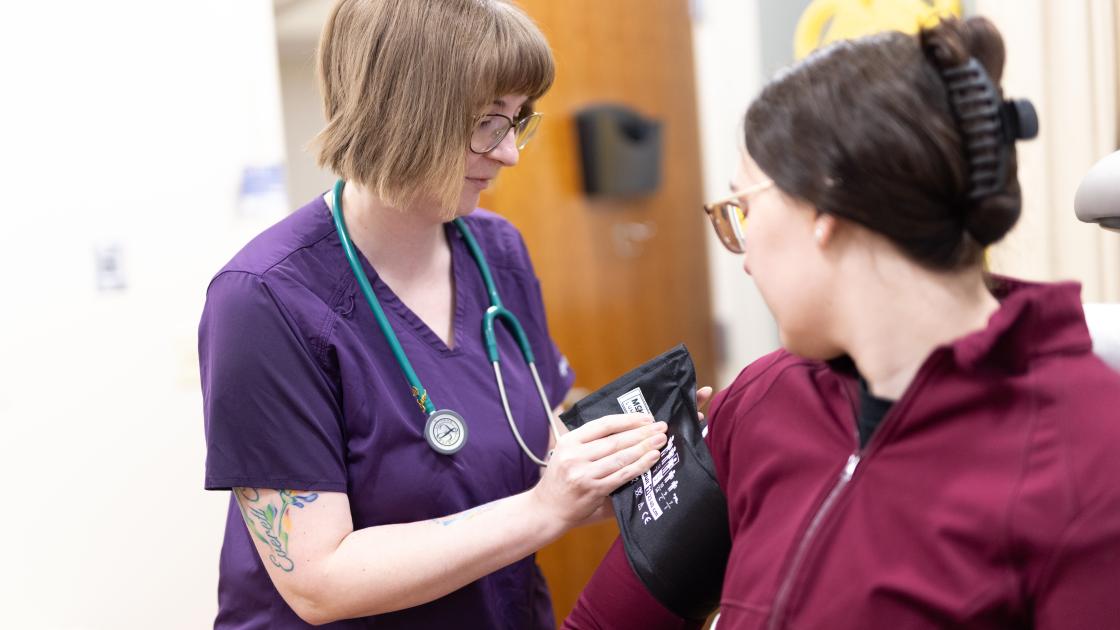
Regular wellness check-ups may seem like a simple part of maintaining your overall health and wellness, but they’re crucial in preventing heart disease and other serious problems. One of the most important measurements your primary care provider checks during these appointments is your blood pressure, a pair of numbers that can reveal a lot about how well your heart and blood vessels are working.
Partnering with a primary care provider to keep those numbers in a healthy range can significantly reduce the risk of issues like heart disease or stroke.
“Our goal at SIU Medicine is to help you learn about your risk factors for heart disease, what is considered a normal blood pressure reading and what is a red flag,” said Dr. Amanda Krus-Johnston, with SIU Medicine Center for Family Medicine in Taylorville. “Understanding those results is one of the most important steps patients can take to control high blood pressure.”
So, what do the numbers actually mean?
The top number
The systolic blood pressure is the first of the two numbers in a blood pressure reading. It measures the pressure on the arteries’ walls when the heart beats. As people age and their arteries stiffen, this number may increase. Your primary care provider looks for gradual changes that could signal risk.
The bottom number
The diastolic blood pressure measures the pressure in the arteries while the heart is resting between beats as it refills with blood. Elevated readings here can also be a warning sign.
What's normal and what's cause for concern?
The American Heart Association recognizes six blood pressure ranges:
Normal: Less than 120/80 mm Hg
Elevated: 120-129 systolic and less than 80 mm Hg
High Blood Pressure Stage 1: 130-139 systolic or 80-89 mm Hg diastolic. At this stage, your doctor may prescribe lifestyle changes or a blood pressure medication.
High Blood Pressure Stage 2: 140 or higher systolic or 90 mm Hg or higher diastolic. Your doctor is likely to prescribe a combination of blood pressure medications and lifestyle changes.
Severe Hypertension: Higher than 180 systolic and/or higher than 120 mm Hg diastolic. If you don’t have symptoms, consult your doctor immediately.
Hypertensive Emergency: Higher than 180 systolic and/or higher than 120 mm Hg diastolic. If you have symptoms including chest pain, shortness of breath, back pain, numbness, weakness, a change in vision or difficulty speaking, call 911.
A single blood pressure reading does not determine whether you have high blood pressure. Your primary care provider will evaluate your results over time to determine if you have consistently high blood pressure. They will also evaluate any unusually low blood pressure readings.
High blood pressure often has no noticeable symptoms, but it can cause devastating effects, including heart attacks and stroke, if left untreated.
“Seeing your primary care provider regularly allows us to catch small changes in blood pressure before they become serious problems,” said Krus-Johnston. “Those routine visits can make a meaningful difference in preventing heart disease and helping patients stay healthy long-term.”