Tired of the CPAP mask? You have options.
What is sleep apnea?
Sleep apnea is a common sleep disorder, affecting approximately 30 million Americans, according to the American Medical Association, and characterized by repeated interruptions in breathing during sleep. These pauses can last from a few seconds to minutes and, in severe cases, may occur 30 times or more an hour.
The most common type is Obstructive Sleep Apnea (OSA), which occurs when the muscles in the back of your throat relax too much during sleep. This can block your airway, causing loud snoring, choking or gasping and repeated awakenings that prevent restful sleep.
Left untreated, sleep apnea can lead to serious health issues like high blood pressure, heart disease, stroke and daytime fatigue that increases the risk of accidents.
How is sleep apnea diagnosed?
Diagnosis typically begins with an evaluation of symptoms and may involve a sleep study, known as polysomnography. This test monitors brain activity, eye movement, heart rate and breathing patterns while you sleep. In some cases, your provider may recommend a home sleep apnea test.
What are CPAP and BPAP therapy?
For years, continuous positive airway pressure (CPAP) machines have been the go-to treatment for moderate to severe sleep apnea. CPAP machines deliver a steady stream of air through a mask to keep the airway open during sleep.
Bilevel positive airway pressure (BPAP) is a similar therapy, but provides two levels of pressure—higher when you inhale and lower when you exhale. This option is often used for people who have trouble exhaling against the constant pressure of a CPAP.
Both therapies are highly effective when used consistently. However, not everyone finds them comfortable or easy to use.
“CPAP is a great option for many of our patients,” says M. Haitham Bakir, MD, a pulmonologist at SIU Medicine. “But for those who struggle with the mask or pressure, we now have other ways to treat sleep apnea that don’t involve traditional machines.”
Inspire®: A mask-free option
One of the most innovative alternatives to CPAP is Inspire® therapy, a small, surgically implanted device that helps keep your airway open while you sleep.
Inspire® uses a small pulse generator implanted in your chest and a sensor that monitors your breathing. When you inhale, the device sends a gentle signal to a nerve that controls your tongue, moving it to keep your airway open.
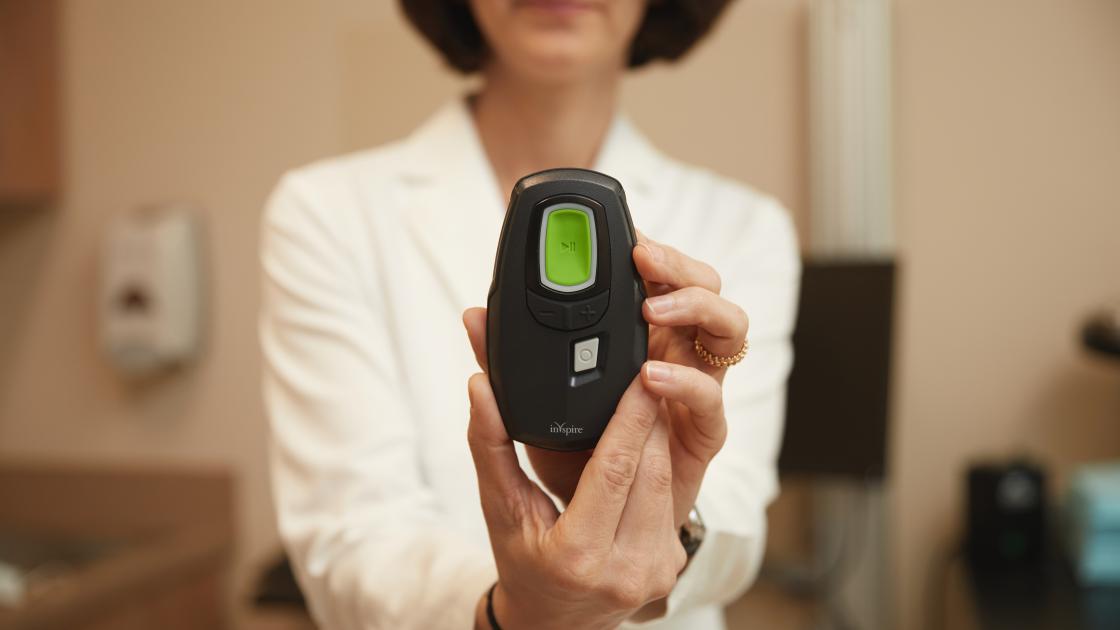
The device is controlled with a small handheld remote, turned on at bedtime and off after waking up. There’s no mask, no hose and no noisy machine.
Inspire® is FDA-approved for people with moderate to severe obstructive sleep apnea who are unable to tolerate or get consistent benefit from CPAP therapy.
“Inspire has been a game-changer for patients who felt stuck,” says Dr. Bakir. “It’s discreet, easy to use, and for many people, it improves their sleep and quality of life without the downsides of a mask.”
Which treatment is right for you?
Choosing the right sleep apnea treatment depends on several factors, including the severity of your condition, your overall health and your comfort level with different devices.
At SIU Medicine, our pulmonary and ENT specialists can find the solution that works best for you. Whether you’re newly diagnosed or ready to try something new, we’re here to help you rest easier.
Visit siumed.org/inspire to learn more, or call 217.545.8000 to make an appointment.