
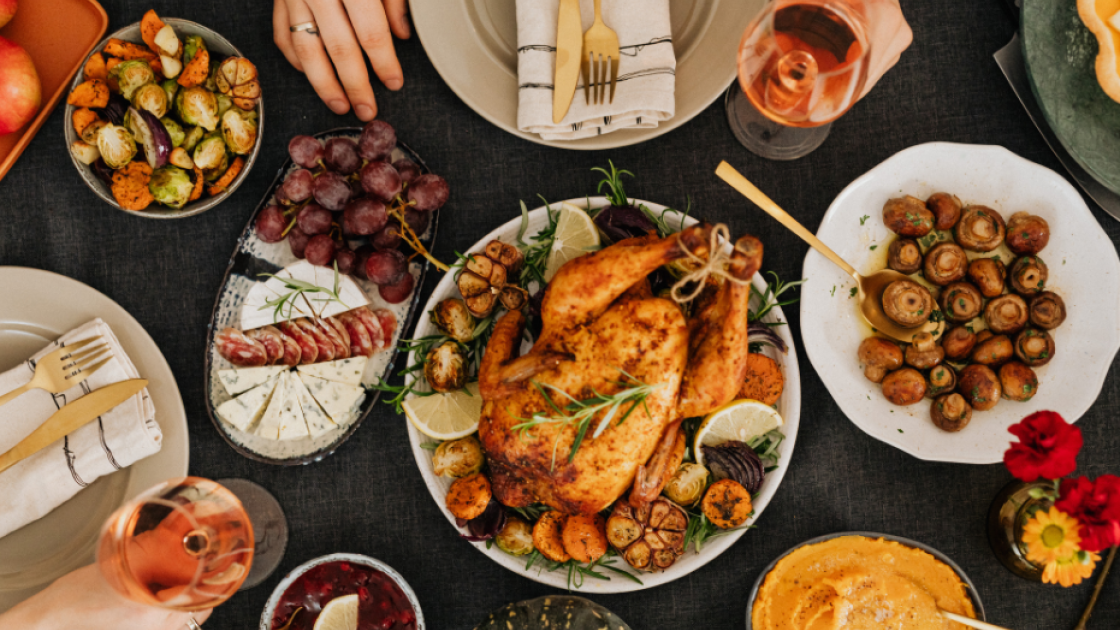
Savor the season: Holiday meal tips for those with diabetes

Holiday gatherings bring warmth, joy and often, a table full of tempting dishes. For people living with diabetes, the season can bring extra challenges, but it doesn’t mean missing out. A few simple strategies can make holiday meals enjoyable and manageable.
1. Don’t skip meals before the feast
Skipping meals to “save up” for a big dinner can backfire. It can lead to overeating and blood sugar swings. Instead, eat balanced meals earlier in the day with protein and fiber to keep blood sugar steady.
2. Bring a dish you can count on
Not sure what’s on the menu? Bring a diabetes-friendly option—like roasted vegetables or a quinoa salad—so you know there’s something delicious and balanced at the table.
3. Use the balanced plate method
This simple tool helps you build a balanced meal:
- Fill half your plate with non-starchy veggies, such as green beans or salad
- Add a quarter plate of lean protein like turkey or fish
- Round it out with a quarter plate of carbohydrates, preferably whole grains or fiber-rich sides
- Don’t forget healthy fats—avocado, nuts or a drizzle of olive oil can add flavor and satisfaction.
4. Choose joy, not just food
Enjoy your favorite dishes—just do it mindfully. Eat slowly, notice the flavors and textures, and stop when you’re comfortably full. Savor the experience, not just the plate. Focusing on conversations, memories and traditions can be just as nourishing.
5. Move a little after you mingle
A short walk after your meal—just 10 to 15 minutes—can help manage your blood sugar. You don’t have to lace up for a full workout. Dancing with family or sweeping the floor counts too.
6. Watch out for sneaky sugars in drinks
Holiday beverages can be surprisingly high in sugar. Eggnog, sweet punch and cocktails can spike blood sugar quickly. Choose unsweetened iced tea, sparkling water or sugar-free versions when possible. If you drink alcohol, have it with food and monitor your blood sugar.
7. Give yourself grace
One meal won’t undo your progress. What matters most is consistency over time. According to the National Institutes of Health, a 1% decrease in A1C—the blood test that reflects average glucose—can lower your risk of microvascular complications by 37%. That includes serious issues like eye, kidney and nerve damage. Keeping that long-term view can help reduce stress during the holiday season.
Quick tips to remember:
- Don’t skip meals
- Fill half your plate with vegetables
- Stay hydrated
- Take a walk after you eat
- Enjoy your favorites—in moderation