
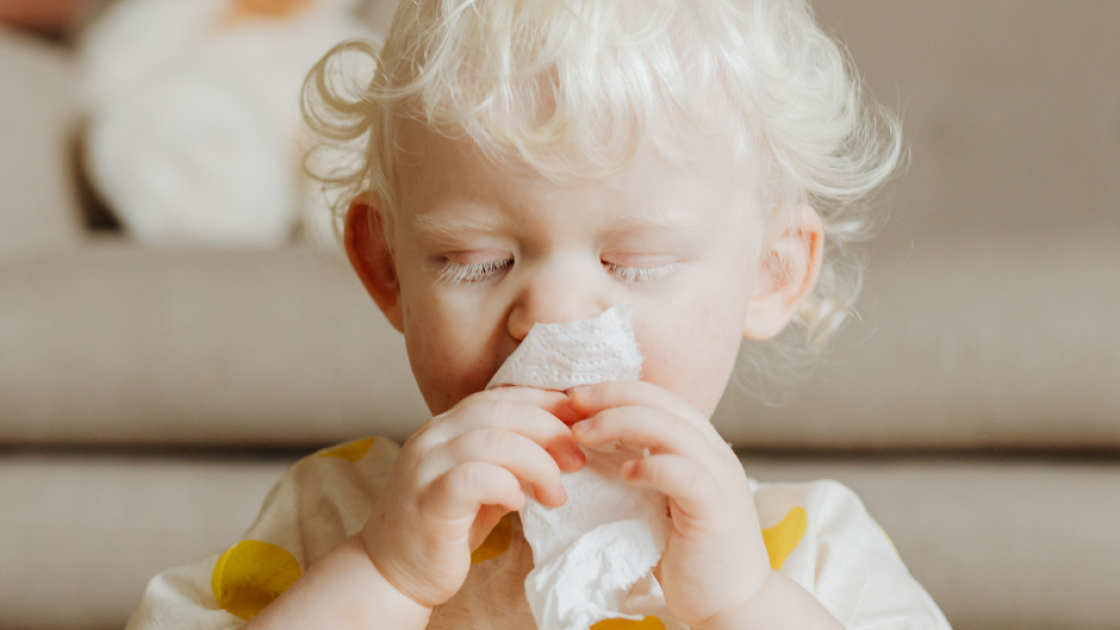
Goodbye sniffles, hello tissues: teaching toddlers to blow their nose
If you have a toddler, you probably know this scene all too well: Your child’s nose is running like a faucet, and every time you reach for a tissue, they turn their head, swipe at their face with their sleeve or worse – just sniff the mess right back in.
Even when they’re willing to hold the tissue and try, teaching a toddler to blow their nose is surprisingly tricky. It’s not a skill that comes naturally, and most little ones have no idea how to make air come out of their nose on purpose. Teaching nose-blowing is one of those small parenting challenges that pays off in a big way. With the right tools, tricks and a little patience, your toddler can master this milestone.
How this small skill helps your toddler in a big way
Stuffy, runny noses can feel never-ending, whether from colds, allergies or just life at daycare. When toddlers don’t know how to clear their nose properly, mucus builds up and can lead to other problems like ear infections or sinus pressure.
Teaching your toddler to blow their nose helps them:
- Breathe easier during colds or allergies
- Sleep and eat more comfortably
- Reduce their risk of ear and sinus infections
- Learn to care for their body
- Spread fewer germs to others
And for parents? Fewer sleeve wipes, fewer messy sniffles and way fewer battles over tissues.
Simple tricks to make nose-blowing click
1. Turn nose-blowing into a game
Toddlers learn best when they’re laughing and playing. If you make nose-blowing feel like a fun game, they’re more likely to try.
- Be an elephant: Show them how to pretend they’re an elephant blowing air out of their trunk (their nose).
- Dragon breaths: Take a big breath in and blow “fire” out of the nose.
- Funny noises: See if they can make silly noises without using their mouth.
2. Help them see what you mean
Blowing air out of your nose feels invisible to a toddler. Help them see what’s happening.
- Feather or tissue race: Hold a tissue or feather under their nose and see if they can make it move just by blowing.
- Fog the mirror: Let them blow on a mirror to make fog and draw silly shapes.
- Parent demo: Exaggerate your own nose-blowing (with funny sound effects) so they can copy you.
3. Go one nostril at a time
Trying to blow from both sides at once is hard for little kids. Start simple and don’t rush.
- Gently press one side of their nose closed
- Tell them to blow air out of the other side
- Switch sides and try again
- Help them notice if one nostril sounds different than the other
4. Practice when they’re happy and healthy
The worst time to teach nose-blowing is when they’re already stuffy, tired or crabby from being sick. Practice when they feel good so they understand what to do when they really need it.
Try building nose-blowing techniques into fun, daily routines.
- After brushing teeth (“Brush, blow, rinse!”)
- Before bed or naps
5. Celebrate the little wins
No toddler learns to blow their nose perfectly overnight. Praise every tiny effort with stickers, clapping, high-fives or simple cheers like “Great job!” – it goes a long way. If they don’t get it yet, that’s okay. Stay patient, stay positive and keep it playful.
Tools for toddler nose care
These simple, parent-approved tools can make nose care easier.
- Saline spray or drops help loosen stuck or dry mucus, so blowing is easier.
- NoseFrida or an electric aspirator is handy for days when they’re too stuffed to blow well.
- Oogiebear nose tweezers/picker are safe and gentle for removing visible boogers.
- Soft tissues or disposable nose wipes help sensitive toddler skin more than scratchy tissues.
- Kid-friendly tissue boxes, such as bright colors or favorite characters, make tissues more fun.
When to call your pediatrician
Most of the time, a runny or stuffy nose is just part of toddler life. However, there are moments when it’s smart to check in with your child’s doctor.
The stuffy nose lasts longer than 10 days
They seem to have trouble breathing or swallowing
There’s thick green or yellow mucus for several days in a row
They have ear pain, fussiness or trouble sleeping
Boogers, sniffles and messy sleeves may feel like a never-ending part of toddler life, but with patience and practice, your child will get the hang of it. When things get extra stuffy, or you’re just not sure what to do next, the expert pediatricians at SIU Medicine are always here to help. From tiny noses to big health questions, we’ve got you covered.