The four reasons you need a primary care doctor
Do you have a primary care provider? A study by the National Association of Community Health Centers found that over 100 million Americans do not have a primary care provider.
A primary care provider is the health professional you visit for your overall medical care and ongoing health needs. They schedule your annual check-ups, ensure your medication prescription is up to date and make referrals based on your needs.
Four reasons you need a primary care doctor
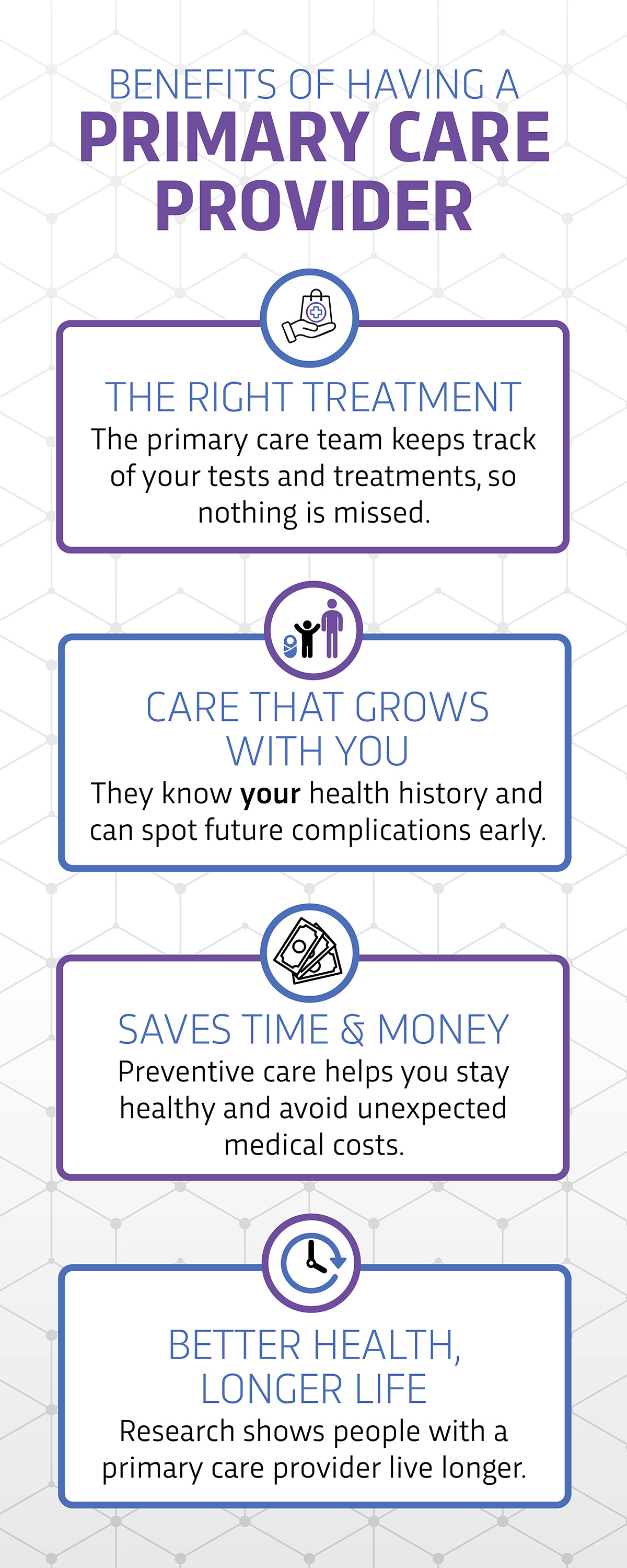
1. The right treatment
The biggest reason for having a primary care provider is having someone who knows your medical history. When did you have your blood drawn last? Did you come down with a cold a month ago? Did you injure yourself while on your last vacation? If you’re only going to urgent care or express care, you might not remember everything that took place during those appointments—your diagnosis, treatment and any referrals. Sticking to one provider means all of your information is in one place—you don’t have to remember it.
This makes it easy for a primary care provider to make the necessary adjustments to your care. They check your file and can see if the initial treatment worked, and if not, what the next steps are to get you the correct treatment. There’s also no redundant testing or treatments.
If you need specialty care—that broken arm after jumping off a cliff at the lake isn’t going to mend itself—your primary care provider can find the right physician for a referral. They can find someone in your insurance network who treats your specific needs and who your provider trusts. Some insurance won’t even cover the cost of specialty care unless you have a referral from you primary care provider.
2. Your medical history
Your medical history can tell a lot about you. You’re unique. Your body’s normal might not be everyone’s normal. A consistent primary care provider knows that. They can pinpoint when you’re going to get sick before you even know you’re going to get sick.
Preventative care is a big part of primary care. Those annual check-ups aren’t just routine. As you age, your body goes through significant changes. What was once your best throwing arm can quickly turn into your worst shoulder pain. A primary care doctor schedules these annual appointments so they can catch issues early and provide you with the medical support to help deal with life's changes.
3. Time and money
Two things we all need more of—time and money. Your primary care provider can give you those back.
During your annual appointment, your primary care provider can schedule and perform several health and wellness services—such as blood tests, immunizations and a general physical exam—all in one visit. Imagine how much time you can save by a one-and-done medical visit once a year.
Most insurance offers incentives or reduced cost for establishing a primary care provider. Essential preventative care is often at zero cost or reduced co-pay. Preventative care helps keep illnesses from getting worse, which is why your insurance emphasizes catching potential health issues early. Don’t wait at urgent care and don’t pay for redundant testing and treatment. Those annual appointments can save you a lot in the long run.
4. Better health—for longer
Research shows that people who have primary care physicians have better health overall and tend to live longer. Life expectancy in the U.S. increased by 51 days for every 10 primary care doctor per 100,000 people, according to a 2019 study in the Canadian Medical Association Journal.
Think of your kids. Having a primary care provider means your health history is written. If you have a chronic condition that’s been cared for by a primary care provider, you can provide that information to your child’s pediatrician. You can help your child skip the frustration that you had when going through your medical journey.
If you’re ready to start living better and saving money and time, you can schedule with an SIU Medicine primary care provider today.
Why Choose a Primary Care Provider