
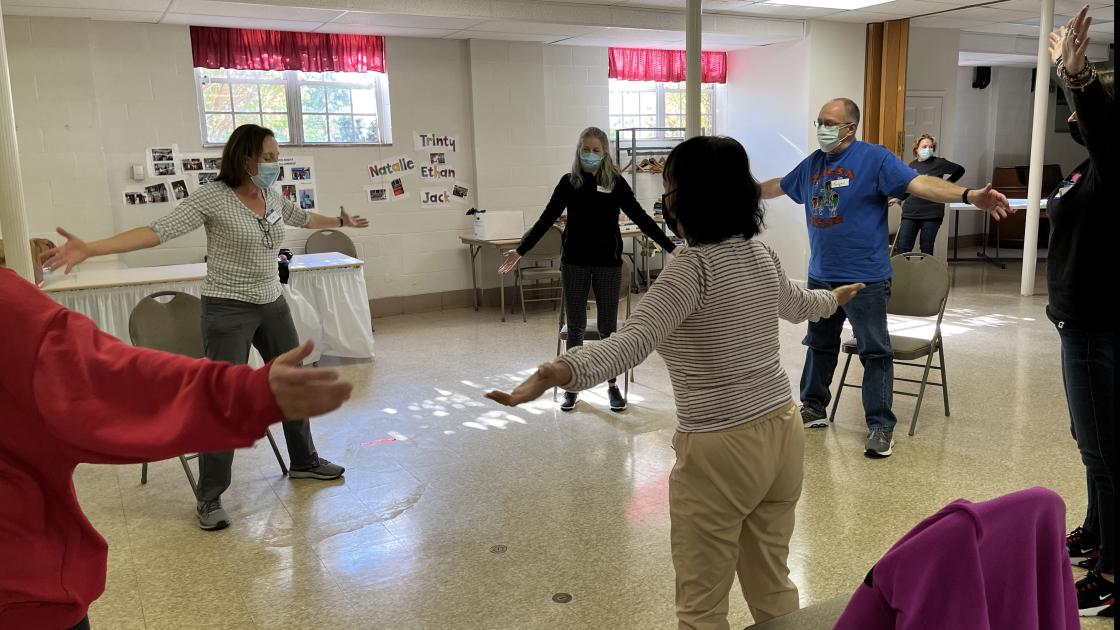
Fun Meets Function in Stepping Up Program
Stepping Up balances dance and exercise therapy for winning combination
Eve Fischberg is the kind of person you think of wearing a permanent smile.
Leading her Stepping Up class, Eve’s positive rhythm and energy pours out. Even so, an extra hint shines through when announcing the exercise’s next accompaniment: “And Your Bird Can Sing” from her favorite Beatles album, “Revolver.” And dancing along with Paul and George’s guitars harmonizing the opening riff, who wouldn’t smile?
Since 2017, Eve has led Stepping Up, a program to help those with memory loss and their care partners develop better balance. Now retired from SIU Medicine, Maggie Schaver was also instrumental in developing the program.
An occupational therapist by trade, Eve’s taken the Otago Exercise Program, an evidence-based falls risk reduction program for individuals in their homes and modified it to be offered to groups in community-based settings, and infused dance.
“Because it’s fun — I love to dance. Whenever I have an opportunity to throw it in, I’m going to use it,” Eve said. “And also because it’s evidence-based. Studies have indicated that participation in dance may be more beneficial for improving balance than a standard exercise class.”
That’s Eve’s theme. She’s going to take what works and make it enjoyable. Sure, turning on “Penny Lane” and “Here Comes the Sun” makes you feel good and think about the old days, but that’s the point. “Musical memory, it taps into emotional memory. That’s retained a whole lot better – it makes them more engaged.”
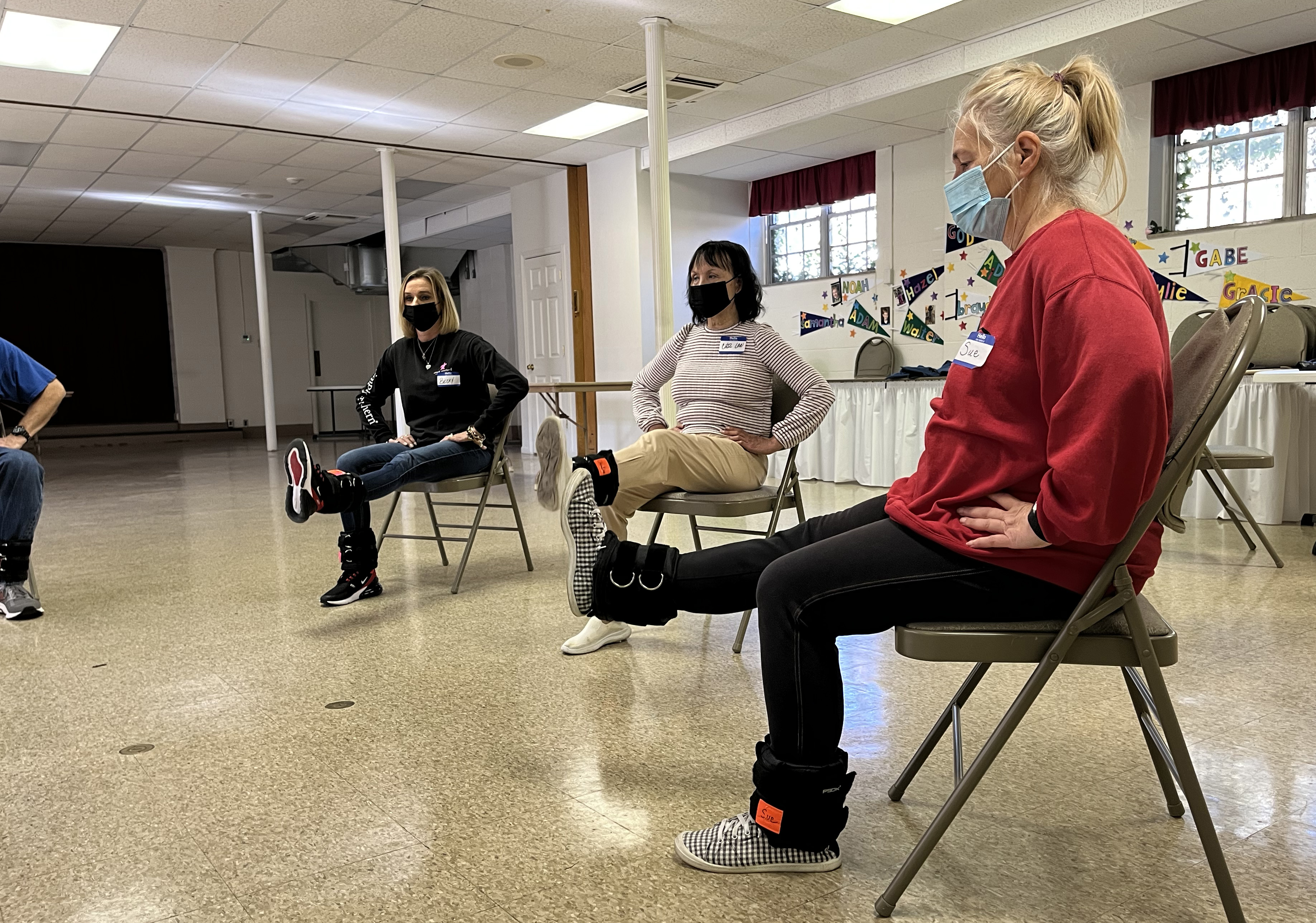
Lateral movements are emphasized because of the propensity of lateral falls, “power moves” are included to increase strength in muscles that weaken with age, and weights are personalized for each participant.
When developing the program, Eve was intentional when including how caregivers could participate, too. But she didn’t fully anticipate improvements in their own balance, let alone the camaraderie: “It’s the fastest-acting antidepressant.”
The other eye-opener? Seeing how those with Alzheimer’s responded over time.
“We’re dealing with people who have neurodegenerative issues and the evidence is, every six months their balance is going to get worse,” she said. “But they were getting better. And I have the numbers to prove it. That’s cool. Now, this is not designed as a study. I didn’t have a control group – it’s not an experiment. But I could look at those numbers and say, these people are supposed to get worse and they’re getting better.”
Good day sunshine, indeed.