
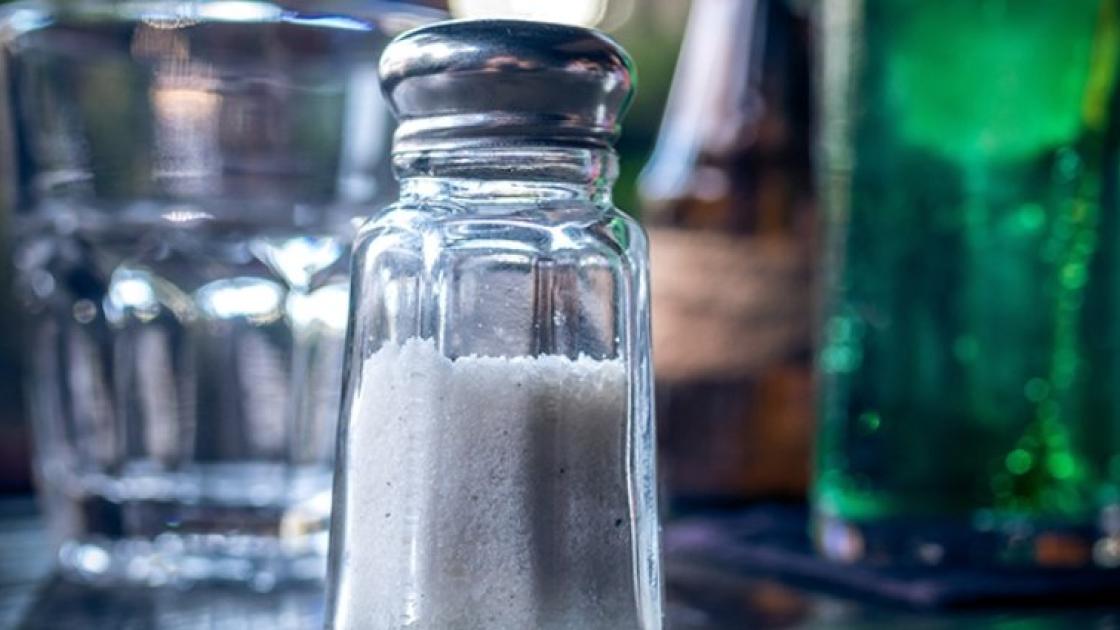
Halt the salt

Americans do a good job taking in about 1½ teaspoons of salt daily with most of the sodium hidden in common processed foods and restaurant meals. This amount of salt is about 1/3 more than is recommended for good health and enough to increase the risk of high blood pressure, stroke and other health problems. The American Heart Association recommends a daily limit of no more than 1500 milligrams sodium daily – that’s about the amount in 2/3 of a teaspoon of salt.
Salt is composed of 40% sodium and 60% chloride, but it’s the sodium part that is a problem. Sodium is found not only in processed and restaurant foods, but in many condiments (for example, catsup), seasonings, poultry, cheese, breads and meats.
Gayle Jennings, a registered dietitian and Certified Diabetes Educator with SIU Family and Community Medicine suggests these simple ways to cut out the extra salt:
- Buy fresh or frozen foods more often than canned. For instance, ½ cup canned green peas has approximately 215mg of sodium, while ½ cup frozen peas have less than 60mg of sodium.
- Cook food from scratch rather than eating prepared foods. Fast foods, frozen dinners and canned foods are higher in sodium.
- Use spices, herbs and sodium-free seasonings in place of salt. Check with your physician before using salt substitute. While sea salt has boomed in popularity, it isn’t any less salty. Just like table salt, sea salt typically contains 40% sodium.
- Drain and rinse canned vegetables, beans, meats and fish with water to remove about 40% of the sodium.
- Always read the Nutrition Facts label to compare foods. Choose foods with the lowest Percent Daily Value (%DV) for sodium. A %DV of 5% or less is low in sodium; a %DV with 20% or more is high in sodium.
The Food and Drug Administration (FDA) has been pushing for the food industry to lower sodium in their food products, but having a lot of resistance. According to Jennings, “The strongest voice is from the consumer; look for lower sodium options and purchase them. That is what drives food manufactures to change.”